
I don’t smoke cigarettes. In fact, smoking repulses me; I hate the smell of it, and feel physically ill when in the proximity of someone who has recently smoked.
But I still believe people should be able to smoke, and I don’t think they shouldn’t be forced into black markets to source their cigarettes because the government has made their legal options prohibitively expensive.
Alas, apparently Australia’s new tobacco and vape tsar has a different opinion:
“Speaking for the first time since she was appointed to the job in July, Amber Shuhyta told The Australian she recognised that large gaps in price between legal and illegal cigarettes could be exploited, but did not believe changing or freezing the inflated tax hikes would make a difference.
‘Price is one of the most effective tools for reducing smoking prevalence – that’s well established. At the same time I recognise that large price gaps can be exploited’, she said.
‘The evidence in front of me suggests the threat of serious and organised crime is driven by a complex mix of factors beyond price, and that changing the excise rate would not necessarily be effective in deterring criminal networks’ ongoing involvement in the illicit tobacco market’.”
Shuhyta is a “psychologist by training”, and seems to have spent her career dealing with mental health and other social services. She does not appear to have any economics training or experience, nor any direct expertise in tobacco or vapes.
That perhaps explains the confusion about how markets work in the above quote.
Shuhyta is correct that high prices deter people from smoking, provided their demand to smoke isn’t perfectly inelastic. But she is wrong to dismiss the other side of the same coin: if high prices are powerful at reducing legal consumption, then the same high prices will create a gap that increases the profitability of illicit supply.
Essentially, the same price wedge that lowers legal consumption also raises black market rents; treating price as decisive for demand but incidental for illicit supply is internally inconsistent.
Shuhyta also ignores the full effect on consumers. Yes, some will quit when prices rise—good for them—but many will substitute legal cigarettes for cheaper alternatives, including illicit cigarettes and vapes. The ones who continue smoking are the hardest hit; they get no benefits from quitting but now have to pay higher prices or dabble with black markets, and they’re often heavily concentrated among Australia’s poorest.
While it’s of course true that other factors are involved, price is a first-order determinant because it sets the rents available on the black market. That then shapes how much things like enforcement must rise to offset those higher returns, or by how much the black market expands. A growing price wedge for tobacco can easily overwhelm the other “complex factors” alluded to by Shuhyta.
The fact is if the government wants to help the most amount of people—including those who will continue smoking regardless of price (tobacco demand is relatively inelastic)—it should cut tobacco taxes to close the price wedge between legal and illegal cigarettes. The current black market price is less than half what a legal pack costs, and they’re not exactly difficult to find.
It should also expand legal access to cheaper substitutes such as vapes beyond the current pharmacy-cartel model, which will reduce demand for cigarettes. Vapes might still be bad for people but they’re nowhere near as toxic as the cigarettes they’re lighting up:
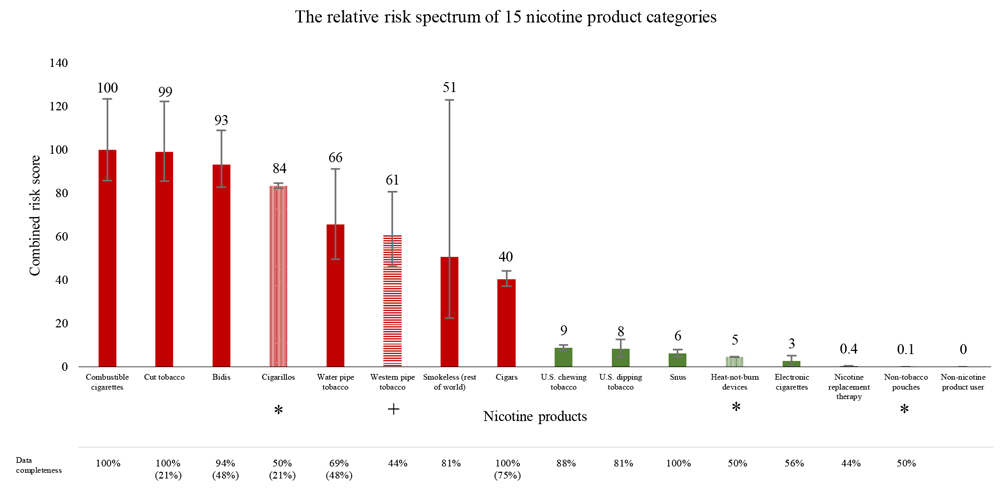
The goal of public health policy isn’t to remove all harms but to do more good than harm overall. Will cutting tobacco taxes and legalising vapes lead to more people doing both, causing some harm? Probably. But it would also do a world of good for the disproportionately poor smokers who pay the burden of Australia’s tobacco excise taxes, and those who suffer at the hands of the criminal networks operating in what is a thriving black market for tobacco and vapes.
The fact that Shuhyta is so dismissive of basic economics and the consequences of the government’s current tobacco and vape policies is troubling to say the least, given the considerable policy influence she will likely possess in her new role.