
Earlier this week I finally landed back in Australia after a long trip to the West Indies. I say “finally”, because while I was only on the ground for a few weeks, getting there and back felt like it took nearly as long—not including the jet lag, which was much worse on the return leg (crossing the international dateline does an Uno Reverse to the the ’east is beast; west is best’ maxim).
Anyway, after settling back in I decided to write up some observations from the experience, beginning with the long journey itself.
Not a quick trip#
From Perth, the Caribbean is about as close to the opposite side of the planet as you can get; plug it into an Antipode finder, and you end up in the ocean around 65km South East of Bermuda. Not quite the Caribbean, but not all that far away, either.
That means to get there, you can fly in either direction: East via Asia and then United States or Canada, or West via Asia or the Middle East and then Europe. Both take a similar amount of time, depending on layovers and such—for us, it worked out to nearly 50 hours to Barbados and around 40 hours on the return trip from Saint Lucia.
Perhaps the biggest concern we had going into the journey wasn’t the travel time or anything to do with the Caribbean nations themselves, but all the horror stories the media had been writing about US border officials harassing travellers under Donald Trump: we elected for the Eastern route to split the two long-haul flights nicely at 10 and 14 hours apiece via Tokyo, which also meant we had to stop in New York.
Fortunately for us that concern wasn’t realised: I can report that it was generally smooth sailing, as it is for the vast majority of travellers to the US (Australian visitor numbers are up 8% from 2024). Indeed, the immigration and customs officials with whom we spoke were helpful and polite, and the whole process was about as efficient as it gets for a US port. Even better, while we were in the Caribbean the US ditched its detestable shoe-removal process after 20 long years, considerably improving the airport experience.
But that’s enough about the journey over; what about the Caribbean? While the purpose of our visit was to watch Test cricket—I’ve since learned that it may end up being Australia’s final tour of the West Indies!—I was also interested in seeing the place for myself, from the vantage of both tourist and economist.
Barbados#
I didn’t know it at the time but of the countries we were to visit, Barbados is clearly the outlier. Despite the fact that it’s the Eastern most island in the Lesser Antilles, Barbados is not part of the Organisation of Eastern Caribbean States (OECS). It’s also completely different from a topological point of view: it’s a mostly flat, sandy island that was formed by deep ocean sediments being “scraped” to the surface.
The Barbadian dollar is pegged to the US dollar at a rate of 2:1, and US dollars were accepted everywhere with change given in local dollars. The banking system appeared to be dominated by Canada’s CIBC, which had a decent presence in all the countries we visited (but don’t use their ATMs—they were the only ones that charged a fee!).
Both of those are probably good things: Caribbean nations are tiny in terms of population, have limited domestic industries, and most only achieved independence relatively recently (so institutional credibility could be an issue). Allowing foreign banks to operate ensures the financial system is diversified and won’t be wiped out by a hurricane, and fixing the currency to the US dollar ensures no nasty import price shocks (global commodities are largely priced in USD).
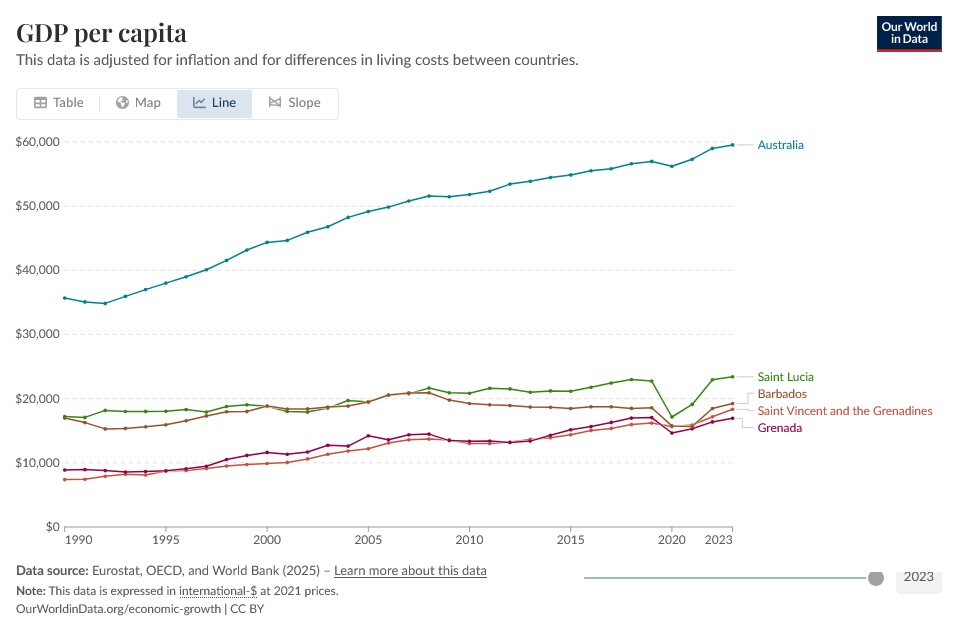
In terms of how the country ‘felt’, Barbados is poor relative to Australia but seemed wealthy enough in the sense that the people looked healthy, the infrastructure was … passable, and everything functioned reasonably efficiently for a small island economy (~280,000 people). I have no doubt that embracing tourism and related services has helped here, as there are pretty firm wealth ceilings for post-slavery agrarian economies that fail to adapt.
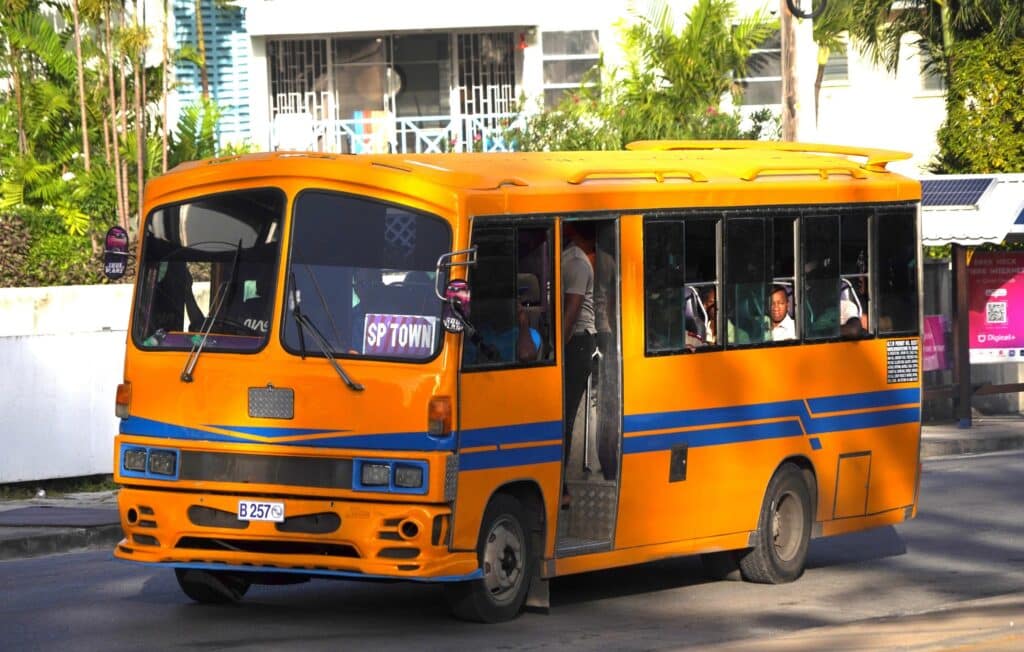
For getting around town, there were larger government buses or private mini buses on all major routes, all charging the same fixed fare, although the latter were much more common (and enjoyable!). The local taxi app, pickUP Barbados, worked very well; in fact, I’d probably use it over Uber if it existed in Australia. The stock of vehicles is almost entirely Japanese, mostly second-hand, with Japanese characters still adorning the dashboards.
We were there in the off (wet) season, so I’m not sure what it’s like when the armada of American cruise ships start floating down, but the majority of foreigners we encountered appeared to be British. A quick search revealed that there are no restrictions on foreign land ownership and property rights are reasonably well respected by global standards, so that, combined with the island’s colonial history and direct flights from London on both BA and Virgin, probably explains why.
The cricket experience#
As for the cricket… well, it was a bit of disorganised mess. After a lengthy performance of security theatre to enter the stadium, it quickly became evident that there was going to be an issue getting food and drink because there just weren’t enough vendors.
While most of the stadium sat empty, the Australian contingent—almost entirely people on organised tours wearing matching shirts—were crammed into a single stand. To serve those hungry and thirsty souls was a lone, overworked bar and a couple of food stalls; at one point I overheard a bloke say that it took him a full session—so around two hours—in the stiflingly hot belly of the stadium just to get lunch!
It all begged the question: why have the capacity to handle such a large crowd and then not use most of it? I can’t be sure, but if I had to guess I’d say it’s due to cost: the stadium had been upgraded for the T20 Cricket World Cup in 2024, and has probably proved far too big for the island’s needs ever since. All of those shuttered kitchens and bars were probably mothballed as soon as the tournament finished, and the cost to get them operational again for a single Test match just wasn’t worth it.
Grenada#
The next stop on our trip was Grenada, the location of the second Test match. Unlike Barbados, Grenada is a volcanic island with steep mountains emerging straight from the ocean. It was immediately hard to imagine that it had much arable land; even the capital of Saint George’s was split in two by a mountain, with the city connected by steep, windy roads and the spectacularly narrow Sendall Tunnel (built in 1894).
The transport infrastructure was definitely inferior to Barbados, which was perhaps to be expected given a topography that more closely resembles Hong Kong than Perth.
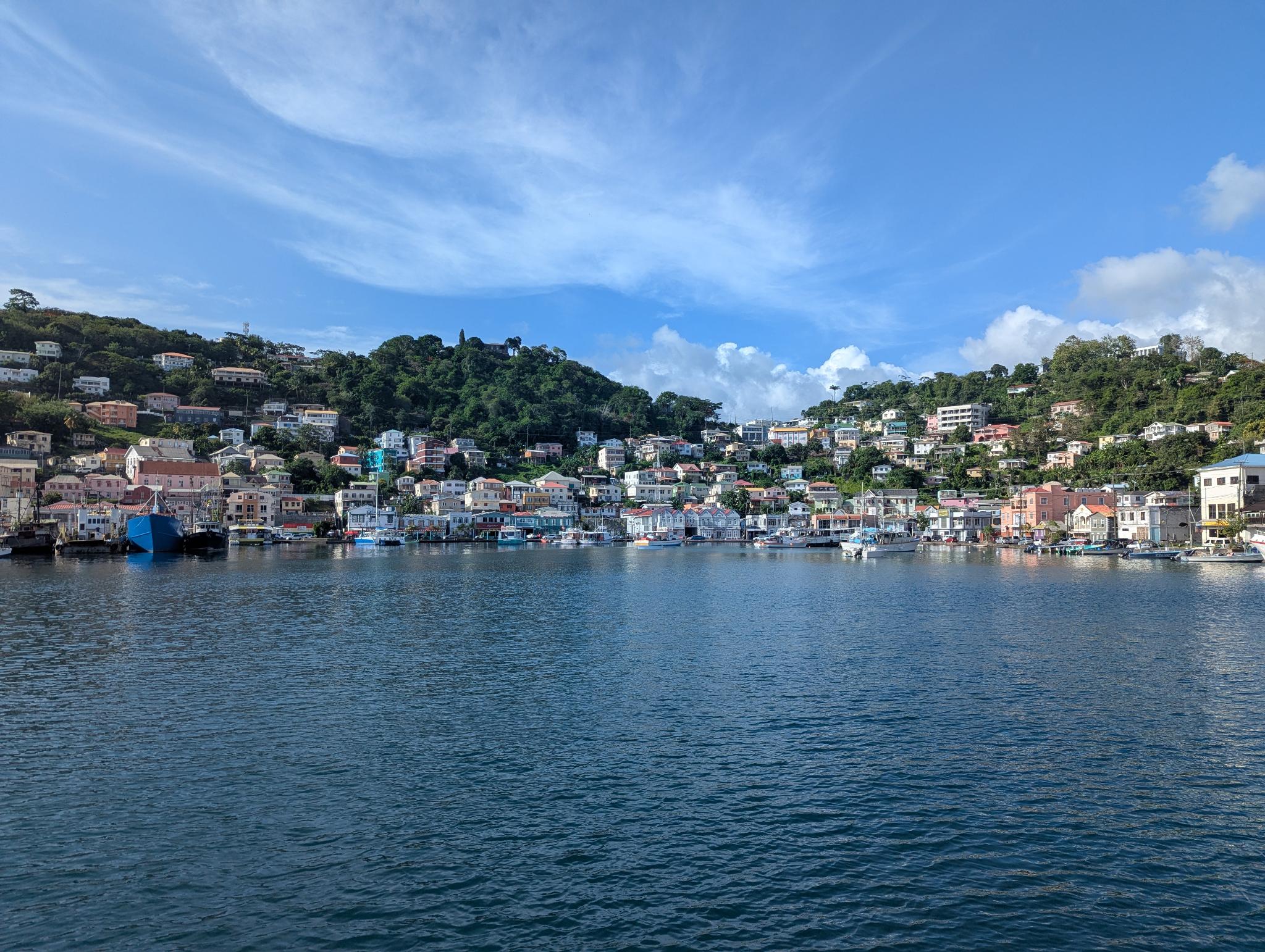
Also unlike Barbados, Grenada (plus six other countries, including the next two we visited) is a member of the OECS and uses Eastern Caribbean dollars, which are pegged to the US dollar at 2.7:1. Canada’s CIBC also had a presence, although I wouldn’t call its financial system all that mature: on more than one occasion we had a local recount a story of some foreign financier running a Ponzi scheme, e.g. promising double-digit interest rates on savings, only for it to inevitably implode.
While Grenada is also a services-dominated economy (largely tourism), it was unique in terms of what it still grows: there really wasn’t any open space for sugar cane fields, so instead the British imported nutmeg from Indonesia. Today, the tiny island (there are fewer people than Darwin) is the world’s second largest producer of nutmeg, and the humble seed even occupies a section of the nation’s flag. I enjoyed Grenada’s rum punch the most, perhaps because of the freshly ground nutmeg they would sprinkle on top!
As for the cricket, it was almost a mirror image of Barbados, with some electrical issues thrown into the mix: a seriously overbuilt stadium operating at maybe 30% capacity with very few locals in attendance, making it tedious to buy food or drink. But this time instead of queuing I managed to flag down an entrepreneurial vendor from an external staircase, securing much-needed supplies throughout the match (security only kicked up a fuss if you tried to bring in brand-name products that didn’t match the official sponsors).
All in all, a very interesting and unforgivable country given the small population, inhospitable topography, and fact that it seems to get smacked by a major hurricane every couple of decades.
Saint Vincent and the Grenadines#
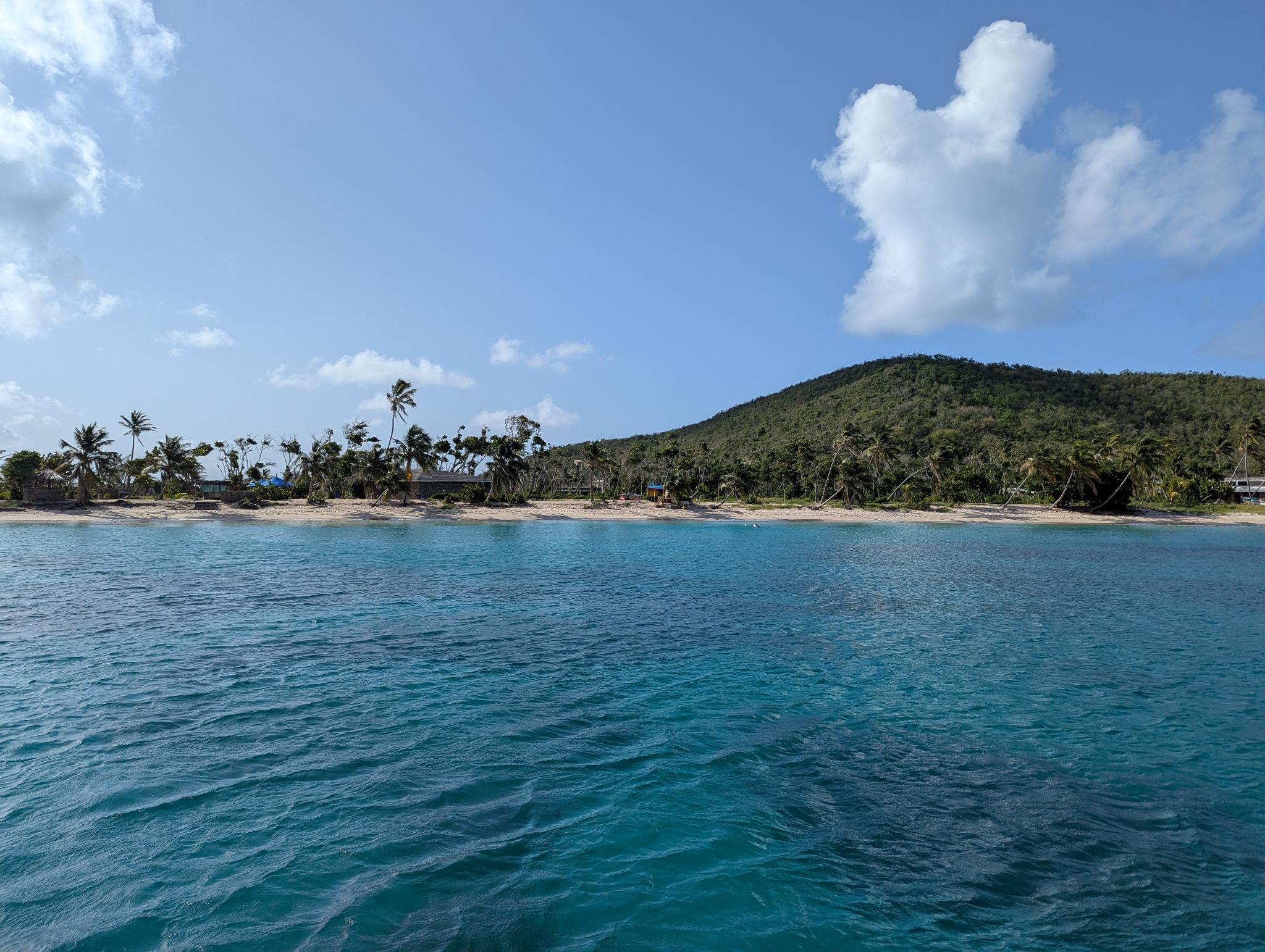
After the cricket we chartered a catamaran, which is now clearly the Caribbean’s vessel of choice due to the added comfort (replacing better-sailing monohulls), and made our way up through the Grenadines, a series of islands between Grenada and Saint Vincent. While this was definitely the highlight of the trip, it’s also what I’m going to write the least about: there’s not much to say about a fishing and tourism-dominated economy, and really you just have to see it for yourself.
That said, without a doubt the turtle sanctuary at the Tobago Cays and the stunning mooring at Saltwhistle Bay were our most ‘stunning’ stops. The Cays is a place you can’t easily find closer to home in Asia or the Pacific—there were so many turtles surfacing throughout the day that it eventually got to the point where we simply stopped talking about them!
The most bizarre sight was the night we spent at Sandy Lane Yacht Club, a European-style luxury marina on the tiny island of Canouan. It was empty when we were there, and apparently sits mostly empty even during peak season. How the mysterious billionaire that built it keeps it going, I do not know—they must be haemorrhaging a small fortune every year.
The only other thing I’ll say about the Grenadines is that hurricane Beryl really did a number on them. One year to the day before we sailed through, Beryl crashed directly into Carriacou, the largest island in the Grenada Grenadines. But it also devastated many of the southern islands of Saint Vincent and the Grenadines, with one local telling us that 80% of the roofs were ripped off.
Any boats that didn’t sail south were destroyed, their hulls still littering the otherwise pristine shoreline. Whether true or not, a local also told us that her village hadn’t received a cent in support from the government—apparently the forthcoming election has seen promised aid funds miraculously redirected elsewhere.
But that certainly hasn’t stopped the entrepreneurial spirit, with one lady diversifying her floating laundry service to also include ice, water, and fuel (many modern catamarans now have built-in laundry, hence the need to adapt the business!).
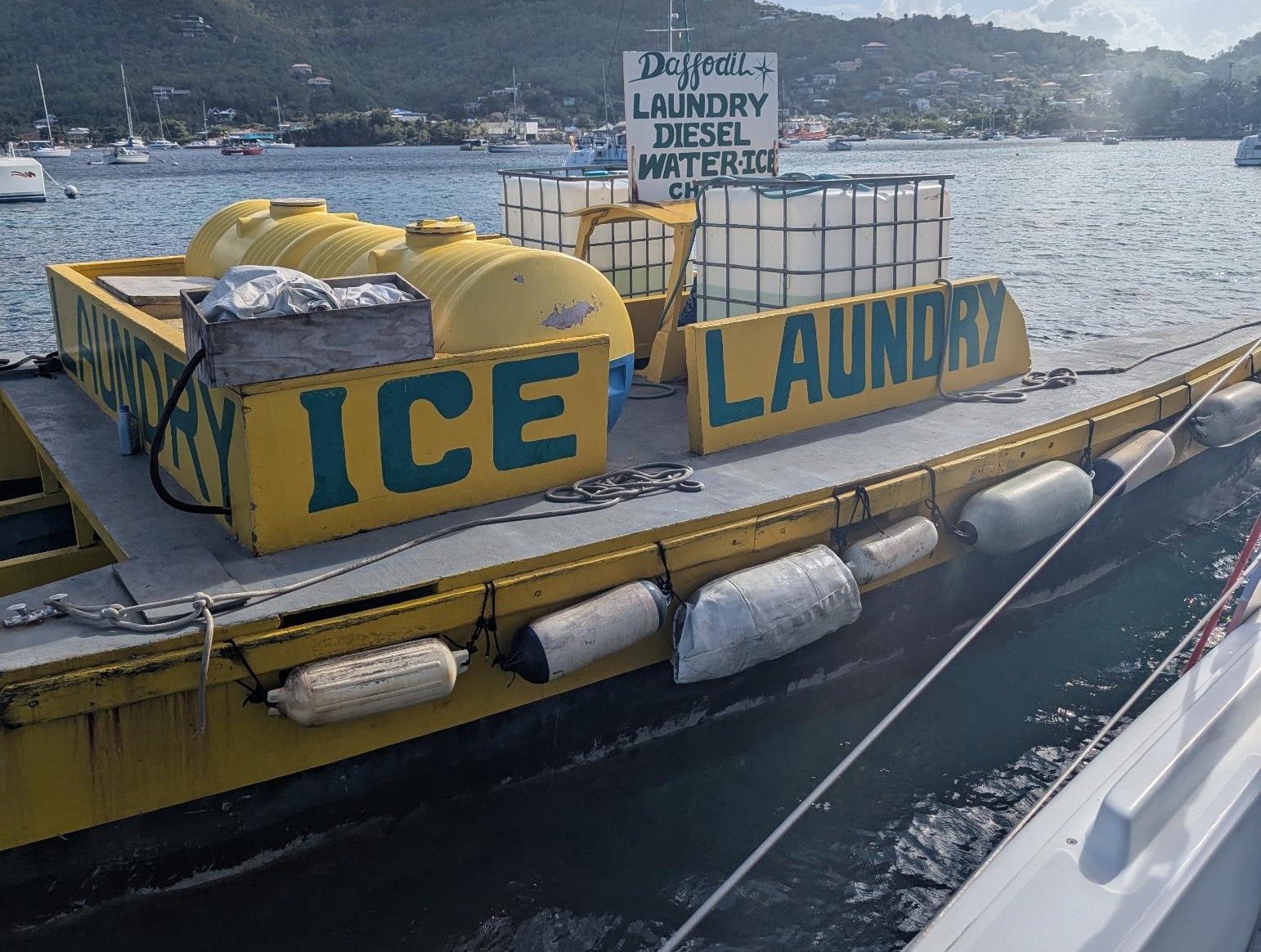
We also heard tales of taxi drivers becoming sustenance fishermen during the pandemic, which delivered a huge blow to these tourism-heavy economies.
Saint Lucia#
Our final stop was Saint Lucia, an island over which the French and British fought and ruled at least half a dozen times each. While the British ultimately won out and the main language is English, many places have retained their French names and all the locals we met also spoke French Creole.
Interestingly, Francis Le Clerc, or “peg leg”, established the first European settlement on the island during the Golden Age of Piracy. Today it’s a services (tourism) dominated economy like most of the Caribbean, and probably had the best transport infrastructure after Barbados.
The houses were small but functional, low density but packed in side-by-side with common walls and no setbacks in urban areas. Just outside those areas you may even find the odd free-standing building that has, against all odds, survived multiple hurricanes.
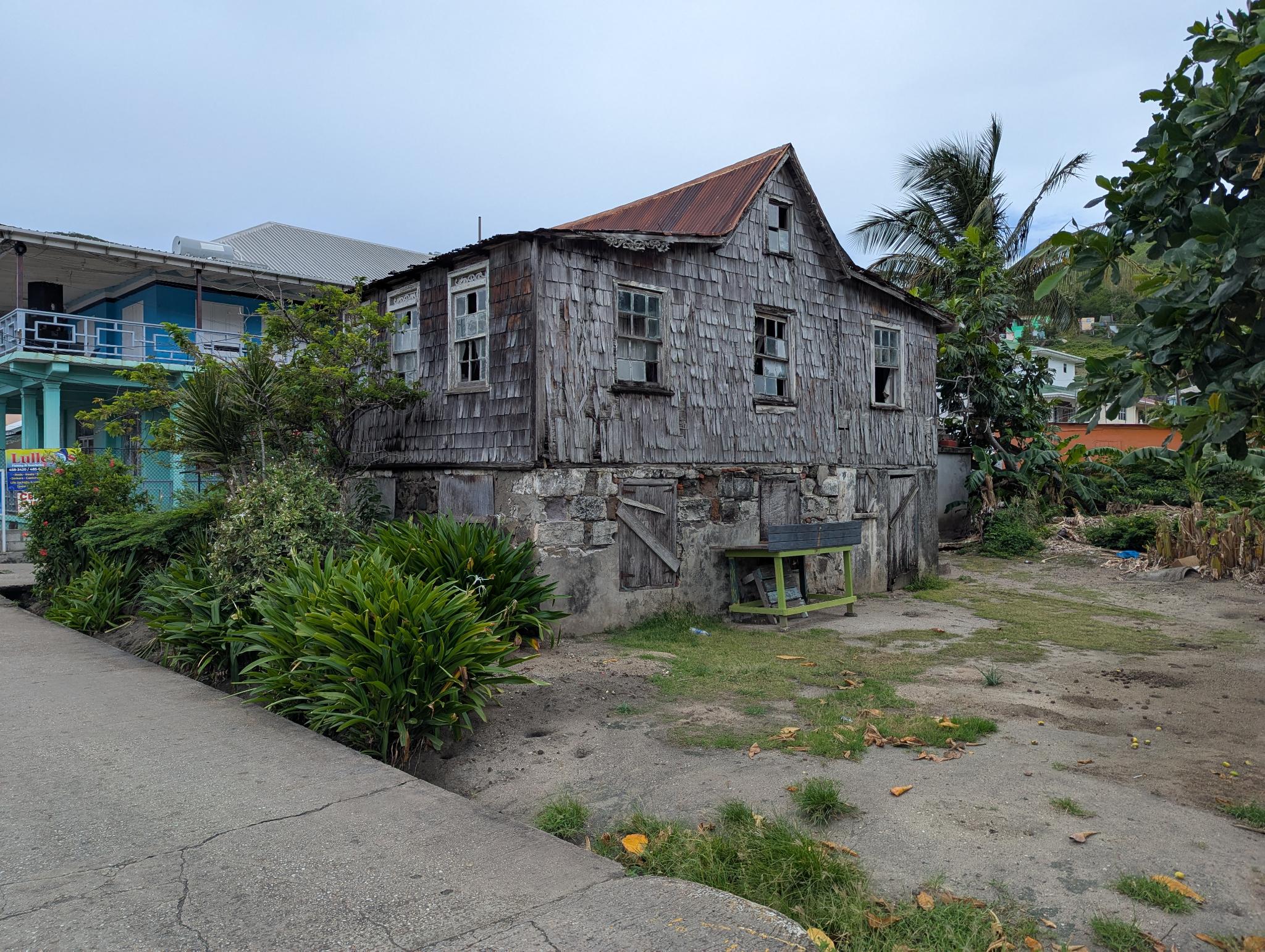
There’s not much else to report, with the main reason to visit Saint Lucia being the tropical climate and spectacular sights, such as the twin Pitons (unexploded volcanoes), numerous waterfalls and mud baths, and of course all the history of piracy and maritime conflict between the English and French (you can see Martinique from the North of the island).
Final thoughts#
It’s clear that these Caribbean nations have fully transitioned their economies towards services, with American tourists now the primary customers, perhaps with the exception of Barbados where the British still have a strong presence.
Other than a few specialised domestic industries like sugar, nutmeg, and alcohol, they’re all heavily dependent on imports—cars from Asia, fuel from Trinidad, and non-tropical food and dry goods from everywhere else. Regular readers know that you shouldn’t make everything in a single country, and that’s doubly true when your country happens to be sparsely populated with limited arable land.
So, would I recommend visiting the Caribbean? Yes, if you’re going to be in the vicinity (e.g. Eastern seaboard of the Americas) anyway, and have the time and money to spare. The people were exceptionally friendly and hospitable, the cities and towns felt safe (common sense applies, as it does everywhere), the food is excellent if you’re into barbecued fish, chicken, or ribs, the tap water is potable, and the rum punches go down a treat.
But if I’m being completely honest, for most Australians you’re probably better off staying closer to home: while the Caribbean nations are beautiful and mostly English-speaking, there was nothing that really stood out compared to what we have in our own backyard—both in Australia, but also across Asia and the Pacific. I also imagine that the experience would be quite different (worse) during peak season, with a cascade of cruise ship passengers clogging up the already-congested roads and forming tiresome queues at the main attractions.